Reflex level GUAGE About
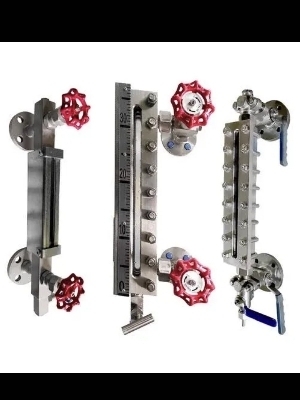
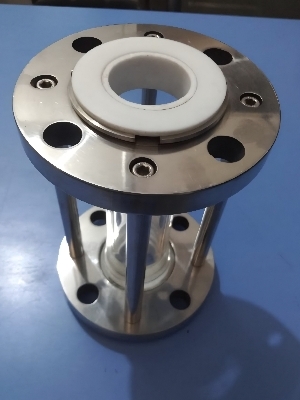
Our Reflex Level Gauges are engineered for safe and accurate liquid level detection in highpressure and hightemperature environments Designed with highquality borosilicate reflex glass these gauges utilize light refraction principlesappearing dark black for the liquid phase and light silverywhite for the gas phaseproviding a sharp unmistakable reading from a distance
Accurate Level MeasurementDesigned with 2 mm accuracy, this Reflex Level Gauge offers clear and direct liquid indication, enhancing safety and efficiency in process-critical applications. The prism effect of the borosilicate glass ensures pronounced contrast for easy level recognition, even from a distance.
Robust Construction for Industrial UseFabricated from high-quality carbon steel, stainless steel 304/316, or alloy steel, the gauge resists corrosion and withstands harsh industrial conditions. It supports up to 40 bar pressure and temperatures up to 400C, fitting a range of process requirements.
Flexible CustomizationOptions for end connections (flanged or screwed), covers (transparent polycarbonate or metal), and optional features such as heating and frost protection meet varied operational needs. Measuring ranges up to 3000 mm and multiple glass sizes ensure flexibility for different tank configurations.
FAQ's of Reflex level GUAGE:
Q: How does the Reflex Level Gauge indicate liquid levels?
A: The gauge utilizes borosilicate reflex glass with a prism pattern that creates a clear white-silver indication. The liquid level reflects light differently compared to the vapor space, giving you a high-contrast, direct reading of the fluid level.
Q: What industries can benefit from using this level gauge?
A: This gauge is ideal for sectors such as chemical processing, petrochemicals, refineries, power plants, pharmaceuticals, and water treatment. Its robust design and wide compatibility with various fluids make it suitable for challenging industrial environments.
Q: When might I need additional features like heating or illumination?
A: Heating options (steam or electric) prevent freezing in cold conditions. Illumination or remote reporting aids visibility in low-light environments or enables remote monitoring, enhancing safety and operational convenience.
Q: Where is the gauge typically installed?
A: It is vertically mounted on the side of tanks or vessels that require continuous and direct level indication. The mounting and end connection (flanged or screwed) can be tailored according to industry standards and site requirements.
Q: What is the installation process for this gauge?
A: Installation involves securing the gauge to the vessel using flanged or threaded connections as per ASME/ANSI/DIN standards. Protective accessories like guard frames or shields and drain/vent arrangements can be incorporated as per request.
Q: How does the gauge ensure safety during operation?
A: Safety is enhanced through optional guard frames, shields, and covers made from polycarbonate or metal, protecting operators from accidental breakage and ensuring safe maintenance and inspection.
Q: What are the main benefits of using a mechanical reflex type level gauge without sensors?
A: Being purely mechanical, it requires no electricity, offers reliable performance in hazardous zones, and provides instant, easy-to-interpret visual level readings, minimizing the risk of electronic failures in critical applications.






 Send Inquiry


 Send Inquiry