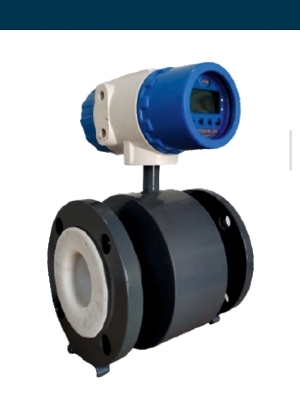
ELECTROMAGNETIC FLOWMETER About
Industrial-grade mag meters generally adhere to these standard parameters: Line Size: Available from DN15 to DN1200 (1/2" to 48"). Accuracy: Standard units offer A 0.5% of flow rate; economy models may range from A 1.0% to A 2.0%. Conductivity: The fluid must have a minimum conductivity, typically >5 I S/cm (microsiemens per centimeter). Operating Pressure: Commonly rated up to 10 kg/cmA (PN10) or 16 kg/cmA (PN16), with high-pressure options available. Fluid Temperature: Standard ranges are -20A C to +100A C for integral units, while remote displays with PTFE lining can handle up to 150A C - 180A C. Output Signals: Standard 4-20mA, Pulse/Frequency, and digital protocols like RS485 Modbus or HART.
Robust Materials for LongevityConstructed from high-quality carbon steel or SS304, this electromagnetic flowmeter promises exceptional durability even under challenging industrial conditions. The choice of materials ensures long service life and resistance to corrosion, making it particularly suitable for handling wastewater and other aggressive conductive fluids.
Superior Measurement & Versatile ApplicationsWith an impressive accuracy of 0.5% and a pressure tolerance up to PN16, this flowmeter ensures reliable measurement in demanding environments. It finds usage in water utilities, waste management systems, and process industries where precise and stable flow data is crucial for operations and compliance.
FAQ's of ELECTROMAGNETIC FLOWMETER:
Q: How does the electromagnetic flowmeter measure flow in conductive liquids?
A: The flowmeter utilizes Faraday's law of electromagnetic induction. It generates a magnetic field within the pipe and detects the voltage induced as conductive liquid passes through, providing an accurate measurement of flow rate without any moving parts.
Q: What are the benefits of using carbon steel or SS304 in this flowmeter?
A: Carbon steel and SS304 enhance durability and resistance to corrosion, which is particularly important when measuring aggressive liquids like wastewater. This robust construction extends the flowmeter's operational lifespan and reliability.
Q: Where is this electromagnetic flowmeter typically installed?
A: It is commonly installed in industrial settings, water treatment plants, municipal utilities, and factories where conductive liquids flow through pipelines. Its IP65 protection allows safe outdoor or indoor mounting.
Q: What communication outputs are available for system integration?
A: The flowmeter supports a range of outputs including 4-20mA, RS485, Pulse, HART, and GPRS. This versatility enables integration with SCADA systems, remote monitoring, and automation networks.
Q: When should I consider using this flowmeter in my process?
A: Consider using this electromagnetic flowmeter when you need precise measurement (0.5% accuracy) of conductive fluids and require robust performance under up to PN16 pressure. It is ideal for applications demanding reliable data and minimal maintenance.
Q: How is the flowmeter powered and what are the power supply options?
A: It can be powered by 24VDC, 220VAC, or a battery. The flexibility makes it suitable for locations with or without grid power, ensuring continuous flow measurement even during power disruptions.






 Send Inquiry


 Send Inquiry