Turbine Flowmeter About
For a professional listing you should include these core parameters to help buyers verify compatibility with their systems Accuracy Repeatability Standard industrial models typically offer 05 to 10 accuracy Highprecision units can reach 02 Repeatability is usually around 01 Flow Range Specify the minimum and maximum flow rates eg 05 to 15 Lmin or 1 to 10 mhr Mention the turndown ratio which is often 101 or 201 Operating Pressure Temperature Common ratings include pressures up to 40 MPa approx 580 PSI and temperatures from 20C to 120C Specialized highpressure models can handle up to 5000 PSI Materials of Construction Typically features a 304 or 316 Stainless Steel body with a 410 or 174 PH Stainless Steel rotor for durability and corrosion resistance Output Signals Most modern listings offer 420 mA analog output pulse output or RS485Modbus for digital communication Connection Types Clearly state the mounting style Threaded NPTBSP Flanged or TriClamp for sanitary applications
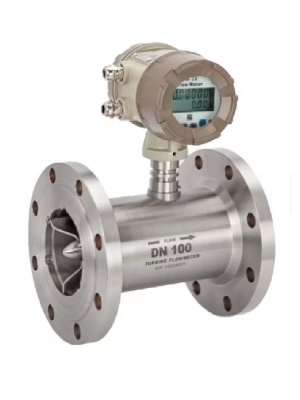
Robust and Reliable PerformanceCrafted from durable SS304 material, this turbine flowmeter is designed to last in harsh conditions. Its IP65-rated body protects sensitive electronics from dust and water, ensuring continual accuracy and reduced maintenance. Suitable for a wide range of non-conductive liquids, it's optimized for industrial reliability.
Flexible Power and Output OptionsSelect from a 24VDC power connection or use the internal battery for remote installations. The device provides real-time data through multiple outputs: 4-20mA analog, RS485 digital communication, or direct pulse output, making it compatible with a broad range of monitoring and control systems.
Precision Measuring for Various ApplicationsWith a 0.5% accuracy rate, this flowmeter ensures dependable measurements across industries. Its 25 NB size and PN16 pressure tolerance allow seamless integration into many pipe systems, delivering trustworthy results in environments where reliability is paramount.
FAQ's of Turbine Flowmeter:
Q: How does the turbine flowmeter work with non-conductive liquids such as pure water or oil?
A: The turbine flowmeter operates by detecting the rotation of an internal turbine as non-conductive liquids like pure water or oil pass through it. The rotational speed is proportional to the flow rate, which is then converted into electronic signals for accurate measurement.
Q: What are the available output and power supply options for this flowmeter?
A: This flowmeter supports multiple output formats including 4-20mA, RS485 digital communication, and pulse signals. It can be powered using a 24VDC source or an internal battery, providing flexibility for both fixed and remote site installations.
Q: When should I choose this turbine flowmeter over other types for my application?
A: Select this turbine flowmeter when you need precise measurement of non-conductive liquids under challenging conditions, require robust construction (SS304 and IP65 rating), and need flexible installation options with 0.5% accuracy for industrial or commercial processes.
Q: Where can this flowmeter be installed for optimal operation?
A: Install the flowmeter in pipeline systems carrying pure water, oil, or other non-conductive liquids. Its 25 NB size and PN16 pressure rating make it suitable for various industrial sectors, including chemical processing and water treatment facilities.
Q: What is the typical process for integrating this flowmeter into a control system?
A: Integration involves connecting the flowmeter's output (4-20mA, RS485, or pulse) to a compatible data acquisition system or PLC. Ensure the power supply (24VDC or battery) matches site requirements, and follow installation guidelines for SS304 components and IP65 enclosures for optimal performance.
Q: How can users benefit from the high accuracy and multiple output options this flowmeter offers?
A: Users benefit from enhanced process control developed through precise 0.5% measurement accuracy and real-time data. Multiple output choices allow integration with different control and monitoring systems, enabling faster decision-making and improved operational efficiency.






 Send Inquiry


 Send Inquiry